
Smart Money System
The Smart Money System: classify the whales, filter them, then decide whether to follow
Following the whales should never mean "they place a bet, so I copy it." Every Polymarket trade is public and traceable. We pull a wallet's full position and entry/exit history, rebuild its real P&L curve, and first work out which type of player it is, whether arbitrage, positive expected value, momentum, information edge or degen. Only once the classification is clear do you know whether this person is worth following.
How do we do it?
Six stages stand between a single address and a signal worth following. That is the smart-money analysis pipeline.
Shortlist candidate wallets
Pull a research watchlist from public leaderboards and on-chain activity.
Pull full trade history
Every entry, exit, price and size laid out in full, with nothing skipped.
Rebuild the real P&L curve
Reconstruct scattered fills into positions and P&L to reveal the true track record.
Behavioral profiling
Break down win rate, holding time, entry timing, market preference and stake sizing.
Classify the player type
Arbitrage, +EV, momentum, sharp or degen, each wallet gets its label.
Filter what is worth following
Screen out what you cannot capture or should not follow, and ship only high-value signals.
Why can on-chain data make this possible?
Polymarket is built on a blockchain, so every trade is public, permanent and traceable: which wallet, at what time, on which side of which market, at what price and in what size, all recorded on-chain for anyone to check.
That means a whale's betting history is no secret. We can pull a wallet's complete position and entry/exit history and reconstruct scattered fills into a real P&L curve. The real barrier is not getting the data but reading it. Faced with the same string of trades, some people only see which side was backed; we see what type of player they are, where the edge comes from and whether they are worth following.
Finding whales with the Polymarket API: our real research method and workflow
What follows is not an illustration but the research workflow we actually ran: locking onto whales from the leaderboard, pulling on-chain data via the API, building profiles and clusters, and finally detecting consensus signals, four steps with real research screenshots.
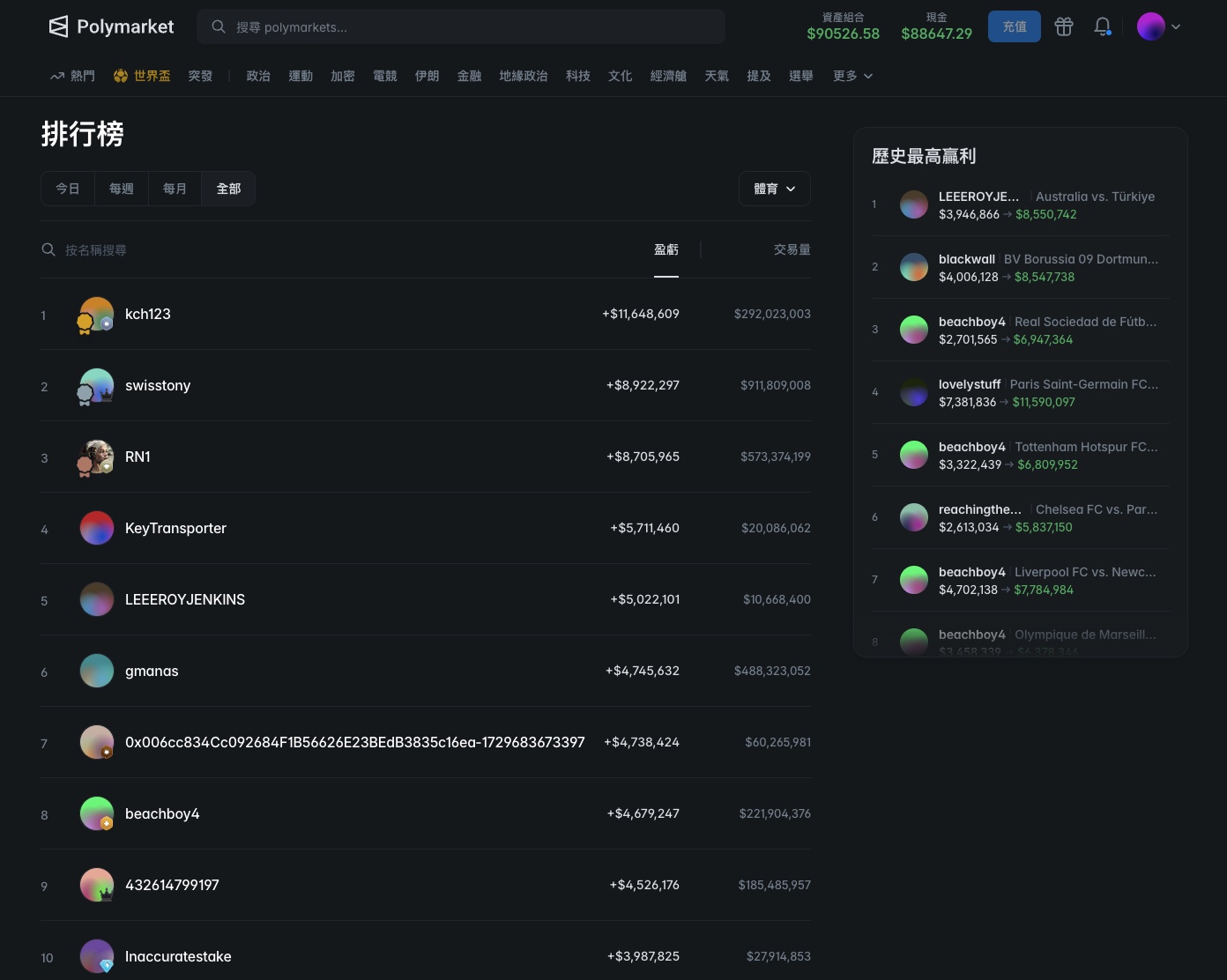
Lock onto the whales
Start from the Polymarket leaderboard and, using lifetime profit, win rate and volume, pick out the high-profit wallets that earn consistently over time as the candidate list for deeper research.
Pull the on-chain data
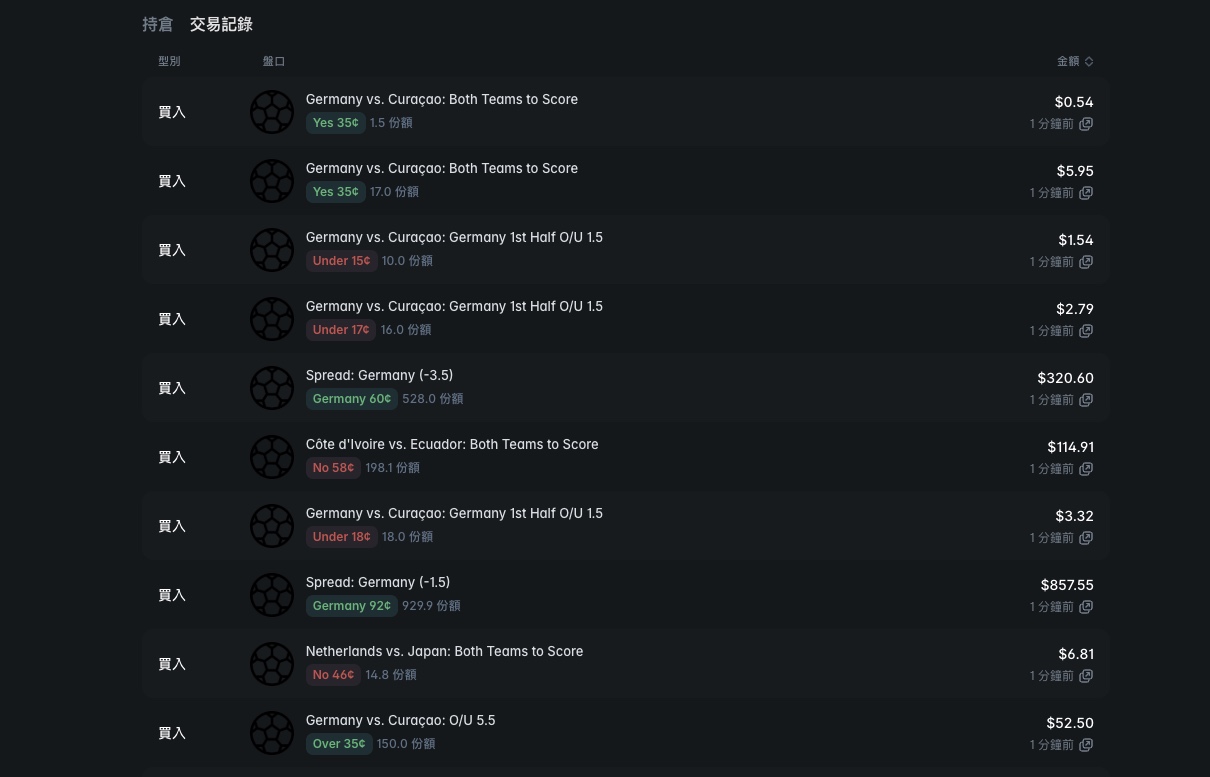
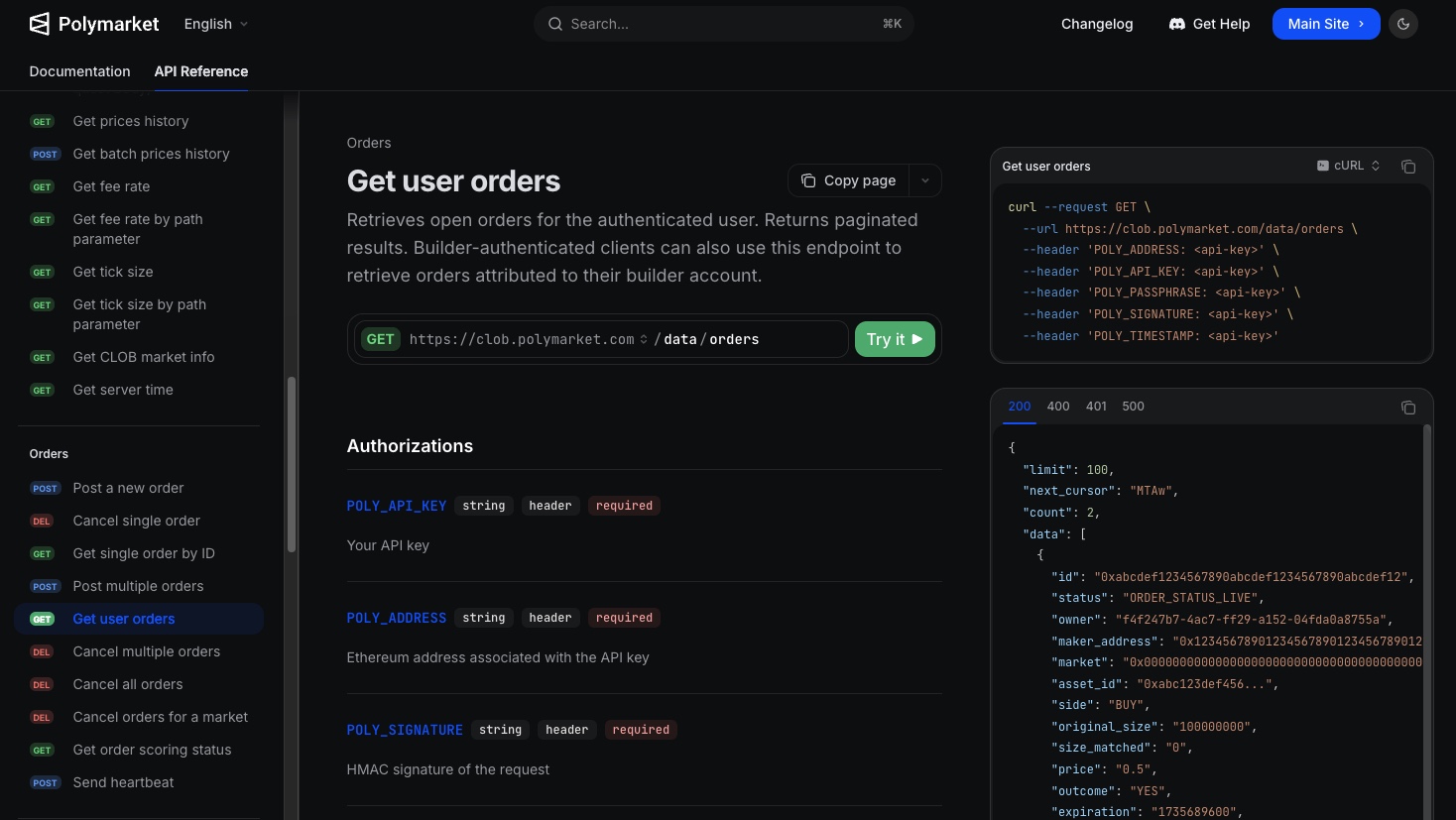
Use the Polymarket API to pull the wallet's positions and trade-by-trade history. In practice, clob.polymarket.com/data/orders returns user orders, while the data-api activity and positions endpoints expose holdings and individual trades; scattered fills are then reconstructed into complete positions and P&L.
Polymarket API docs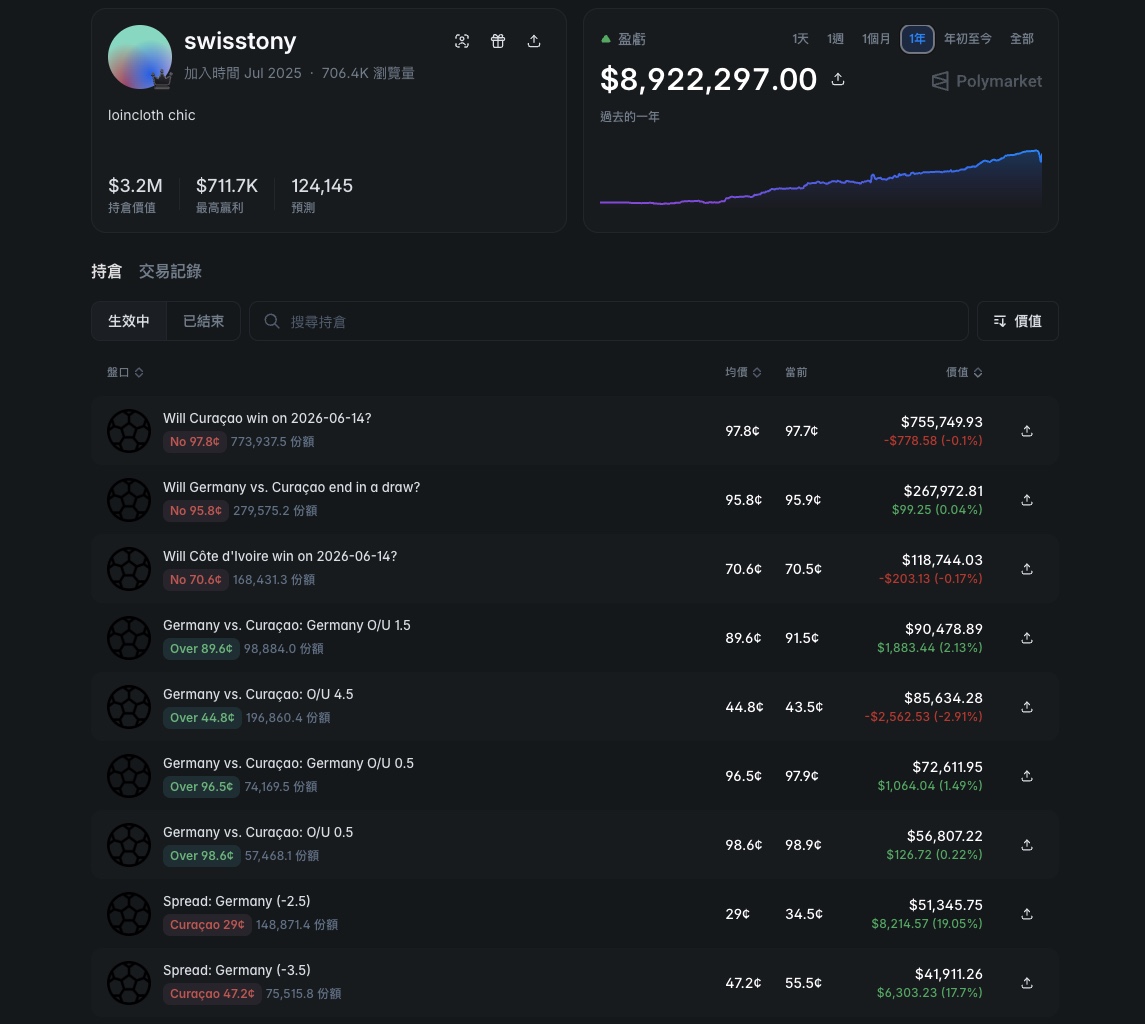
Build profiles and clusters
Run four analyses on the data we pull: whale profiling (trade frequency, stake distribution, holding time), market clustering (which markets attract the most whales), consensus analysis (whether multiple whales back the same direction) and price-leadership analysis (the timing between whale entries and subsequent price moves).
Detect consensus signals
When several whales classified as high value back the same direction in the same market at the same time, the system emits a whale-consensus signal. This is exactly what the clustering analysis is ultimately looking for.
Five types of whales: which ones are worth following?
On the leaderboard they are all "people who make money," but how they make it differs wildly. Lay out the P&L curve and behavioral traits and whales fall into roughly five types. Whether you can follow them, and whether it is worth it, starts with which type they are.
Positive Expected Value Player
+EVConsistently backs the side the market has underpriced. Individual bets win and lose, but the P&L curve trends up over time. The edge comes from mispricing, not luck.
Information-Edge Player
Sharp / InsiderUnusually accurate in specific leagues and enters well before the market reacts, as if knowing something a step ahead.
Momentum / Trend Player
MomentumChases the direction of odds movement, follows wherever price goes, and turns positions over quickly with short holds.
Arbitrage Player
ArbitrageLocks in price gaps across markets and platforms, betting both sides to secure the profit. Win rate is extremely high, but margins are thin and outcomes barely matter.
Degen / Emotional Player
DegenOversized stakes with no discipline: lets it ride when winning, doubles down when losing. Performance rides on luck, not method, and one big hit can spike up the leaderboard.
The above is a classification framework and methodology used to understand how different players make money. It is not a named assessment of, or performance endorsement for, any specific real person.
Where is the hard part?
The data is public, but turning it into player types means clearing three hurdles.
You see the trade, not the intent
The chain records who bought what, never why. A single buy could be conviction, a hedge, or one leg of an arbitrage. Only the overall behavioral pattern reveals which type of player they really are.
Strip out arbitrage and luck from returns
A profitable balance does not mean an edge. Arbitrage profit comes from spread structure and degen profit from survivorship bias, and neither is reproducible. Only after netting these out does true judgment show.
Wallets rotate and fragment
One person may run several wallets, switch to new addresses at any time, and split positions across orders. Tracking cannot rely on a single address; it requires continuous monitoring, de-duplication and linking likely same-source behavior together.
What will you see?
The same on-chain data, broken down into three views, and only for wallets that pass classification.
Position snapshot
For each wallet that clears classification, see which markets it holds, which side it is on and how large the position is, so you grasp the current smart-money layout at a glance.
Entry/exit timeline
The build, add and close sequence for each wallet in each market, so you understand when they enter and when they leave, not just the final result.
Reconstructed P&L curve
Rebuild trade-by-trade fills into a complete position and P&L trajectory. This curve is the core basis for judging player type and the starting point for classification.
Pair it with auto-following
Once classification has filtered out the wallets worth following, want to execute automatically? The Smart Money System pairs with the Polymarket auto-betting bot to turn a chosen wallet's moves into automated following, removing the lag of watching signals and placing bets by hand. To discuss how the two systems fit together and whether they suit your use case, feel free to contact Telegram support.
How do you get access?
This service is invite-only. There is no public checkout on the site; access is granted only after review by our support team.
Message our Telegram and share your needs
Tell us what you want to track (sports, politics or other markets) and how you plan to use it. Support will first confirm whether the service fits you.
Confirm the plan and details
Support confirms your tracking scope, how signals are delivered and what the plan includes. Activation only proceeds once both sides are clear.
Get the private link and start
Once approved, we provide a dedicated private link to the service. After activation you start receiving the classified, filtered smart-money signal stream.
Three things to know before you use it
Past performance is no guarantee
Even when classified as +EV or sharp, a past P&L curve only reflects the record so far. There is no guarantee the same performance continues.
Whales lose too
Smart money gets the direction wrong as well. Following any wallet carries the risk of loss, so only commit funds you can afford to lose and make the final call yourself.
Copy-following has lag
There is a delay between an on-chain fill and the signal reaching you. By the time you see it the market price may have moved, so your actual fill price will differ from the whale.
The Smart Money System sells the ability to organize, classify and analyze public on-chain data. It promises no returns or win rate for any following activity, and any profit or loss from following is borne entirely by the user.
Want to use the Smart Money System?
This service is invite-only: message our Telegram and tell us your needs, and once approved we will provide a dedicated private link.
Not for anyone under 20. This service only provides information organization and analysis; it does not handle funds or place bets on your behalf. Assess rationally and bet within your means.